

Is Tallow Good for Your Skin? What to Know Before You Try It.
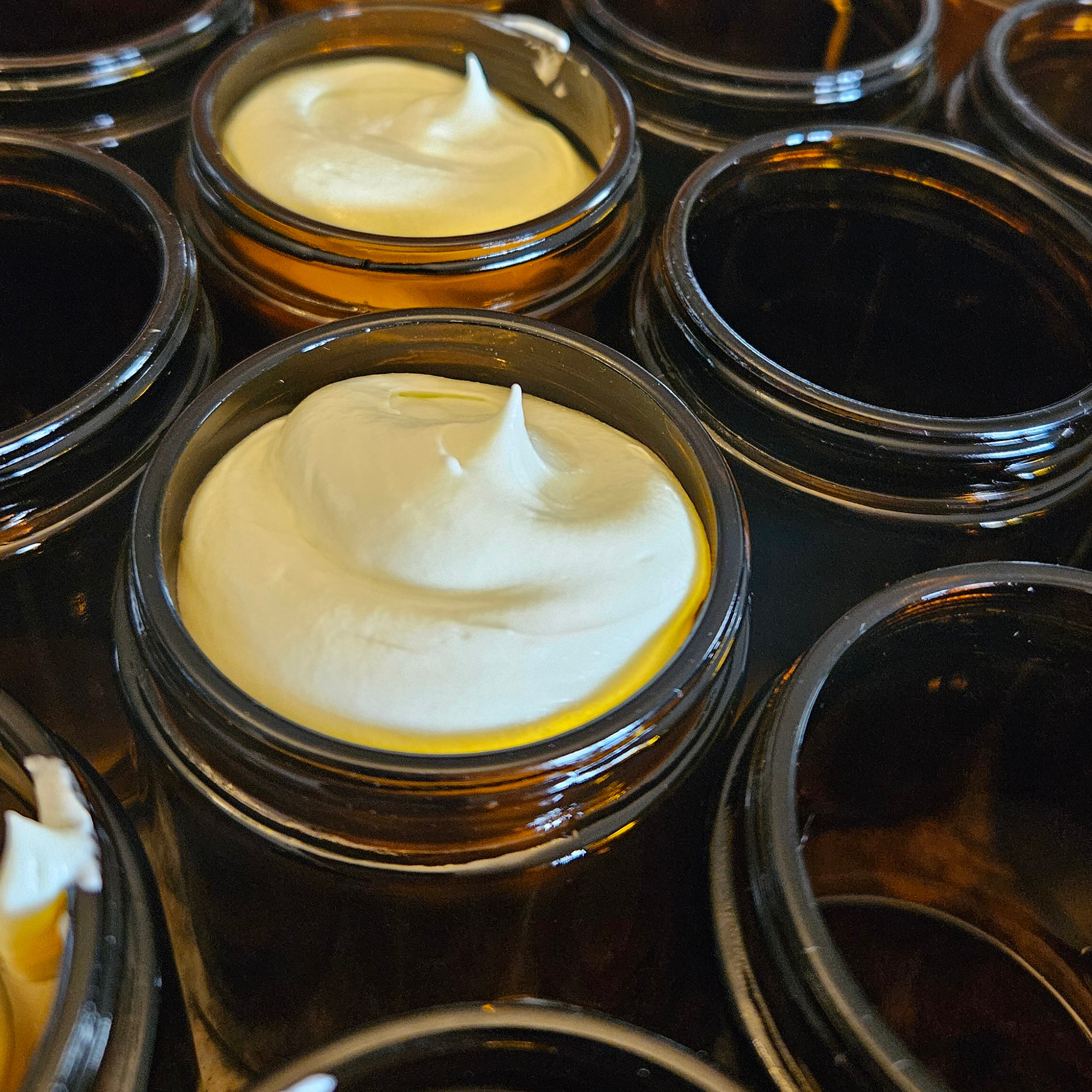
If you've been hearing more about tallow skincare lately, there's a good chance you've had this thought:
Wait…you want me to put beef fat on my face?
Fair question.
If your only experience with tallow is thinking of it as an animal fat used for cooking, the idea of using it as a moisturizer can sound a little strange.
But properly rendered and formulated tallow skincare is very different from taking fat from the kitchen and putting it on your skin.
So, is tallow good for skin?
For many people, tallow can be a wonderfully rich and simple moisturizing ingredient—especially for skin that tends to feel dry, tight, or uncomfortable. But that doesn't mean tallow is magic, that every tallow product is created equally, or that it's automatically the right choice for every person.
Here's what I think you should know before trying it.
First, What Exactly Is Tallow Skincare?
Tallow is rendered animal fat, most commonly from cattle.
Rendering is the process of gently separating and purifying the fat from the other tissue and impurities. When tallow is being prepared specifically for skincare, the quality of the original fat and the rendering and purification process matter.
The finished tallow can then be used as the base for balms, creams, lotions and other skincare products.
At Highland Tallow Co., tallow isn't an unusual ingredient we've added simply because it's trendy.
It's the foundation of our skincare.
We formulate around it, combining it with carefully selected ingredients to create products for different uses rather than throwing together a long list of ingredients just because they sound good on a label.
Why Use Tallow on Your Skin?
One of the things that makes tallow so useful in skincare is its fatty-acid composition.
Tallow contains fatty acids such as oleic, stearic, and palmitic acids—all of which are commonly found in skincare formulations because of their emollient properties.
In plain English?
They help soften and condition the skin.
Tallow is also naturally rich, which means you don't need very much to moisturize effectively.
That's one reason people with dry-feeling skin often enjoy tallow products. A small amount can create a protective, emollient layer that helps reduce moisture loss and leaves skin feeling softer.
And that brings us to one of the biggest misconceptions about tallow.
"Doesn't Tallow Just Sit on Top of Your Skin?"
In a way, that's partly what a good moisturizer is supposed to do.
We sometimes assume that skincare has to disappear completely into the skin to be working.
But your skin barrier's job includes keeping water inside your skin.
Emollient and occlusive ingredients help support that process by softening the skin and slowing water loss from its surface.
That's why applying a tallow-based moisturizer after bathing or washing can work especially well.
You're not trying to force moisture deep into your skin.
You're helping create an environment where your skin can better hold onto the moisture it already has.
Does Tallow Smell Like Beef?
This is probably one of the first questions people ask us.
And understandably so.
Properly rendered skincare tallow should not make you walk around smelling like dinner.
Tallow does have its own natural scent, and completely unscented products may retain a very mild characteristic aroma depending on the tallow and how it was processed.
However, a strong unpleasant or rancid odor isn't something I'd consider normal for a quality finished skincare product.
This is one area where sourcing, rendering, storage and formulation make a difference.
Does Tallow Feel Greasy?
It can—especially if you use too much.
This is probably the biggest mistake first-time tallow users make.
They scoop out the same amount they would use with a conventional body cream and then wonder why they're shiny.
Start smaller than you think you need.
For a concentrated tallow balm, you may only need a pea-sized amount—or even less—for your face.
Warm it between your fingertips and gently massage it into the skin.
Give it a few minutes.
If your skin still feels heavily coated afterward, try using less next time.
Tallow skincare isn't necessarily supposed to feel greasy. But because it's concentrated, using too much can certainly make it feel that way.
Can You Use Tallow on Your Face?
Yes, tallow can be formulated into products intended for facial use.
But this is also where I don't like blanket statements such as:
"Tallow is perfect for every skin type."
No skincare ingredient is perfect for everyone.
If your skin tends to be dry or you prefer richer moisturizers, you may love the feel of a tallow balm.
Someone with oilier or acne-prone skin may prefer a lighter application, a different formulation, or may find tallow simply isn't their favorite moisturizer.
Your skin gets a vote.
When you're trying a new product, start with a small amount and pay attention to how your individual skin responds.
Why Does Such a Small Amount Go So Far?
If you're used to lotions, this can take some getting used to.
Many traditional lotions contain a significant water phase. That's part of what gives them their lightweight texture and makes them easy to spread.
A whipped tallow balm is much more concentrated.
You're applying fats and oils directly rather than applying a product where water makes up a large portion of the formula.
That's why a 4-ounce jar of tallow balm can last much longer than you might expect.
And it's another reason I tell new customers:
Don't scoop. Dab.
You can always add more.
Is All Tallow Skincare the Same?
Definitely not.
"Tallow" on the front of the jar tells you one ingredient. It doesn't tell you the entire story.
Look at the complete ingredient list.
What else has been added?
How was the product formulated?
Is it a pure tallow balm, a whipped balm, a lotion, or something else?
Does it contain essential oils or fragrance?
Does it contain ingredients that work for your skin?
And don't automatically assume that the product with the shortest ingredient list is always superior.
Sometimes additional ingredients serve an important purpose.
For example, we may combine tallow with carefully selected oils or botanical ingredients because we want a particular texture or skin feel. A properly formulated tallow lotion requires additional ingredients because you're creating a stable product containing both water and oils.
Simple formulation should mean intentional formulation—not avoiding ingredients simply for the sake of having a shorter label.
Grass-Fed Tallow, Rendering and Formulation Matter
If you're comparing tallow skincare products, don't stop at the word "tallow."
Ask where the tallow comes from.
Look at how the company talks about its ingredients and formulation.
Read the complete ingredient list rather than relying on the claims printed across the front.
And look for a maker who is willing to explain why ingredients are included.
That's important to me because natural skincare shouldn't require blind trust.
You should be able to turn the jar around, read what's inside, and understand why those ingredients are there.
Tallow Isn't Magic
This might be the most important thing I tell someone who is considering tallow skincare.
Tallow isn't magic, and I don't believe one ingredient fixes every skin concern.
It's not going to erase every wrinkle, solve every breakout, or transform everyone's skin overnight.
And I become skeptical anytime skincare is marketed that way—natural or otherwise.
What I love about tallow is much simpler.
It allows us to create rich, nourishing skincare that helps soften the skin and reduce moisture loss without requiring you to build your life around a complicated skincare routine.
For me, that's the beauty of tallow.
Not miracle skincare.
Simple skincare that does its job.
So, Is Tallow Good for Skin?
Tallow can be an excellent moisturizing ingredient, particularly if you're looking for rich, emollient skincare or trying to simplify what you're using.
But the better question might be:
Is this particular tallow product a good fit for my skin?
Look at the entire formulation.
Consider your skin type.
Start with a small amount.
Give your skin time to tell you what it thinks.
And don't feel like you need to replace everything in your bathroom just because you've decided to try tallow.
Start with one product.
Use it consistently.
See how your skin responds.
That's a much better introduction to tallow skincare than buying an entirely new routine overnight.
New to Tallow? Start Here.
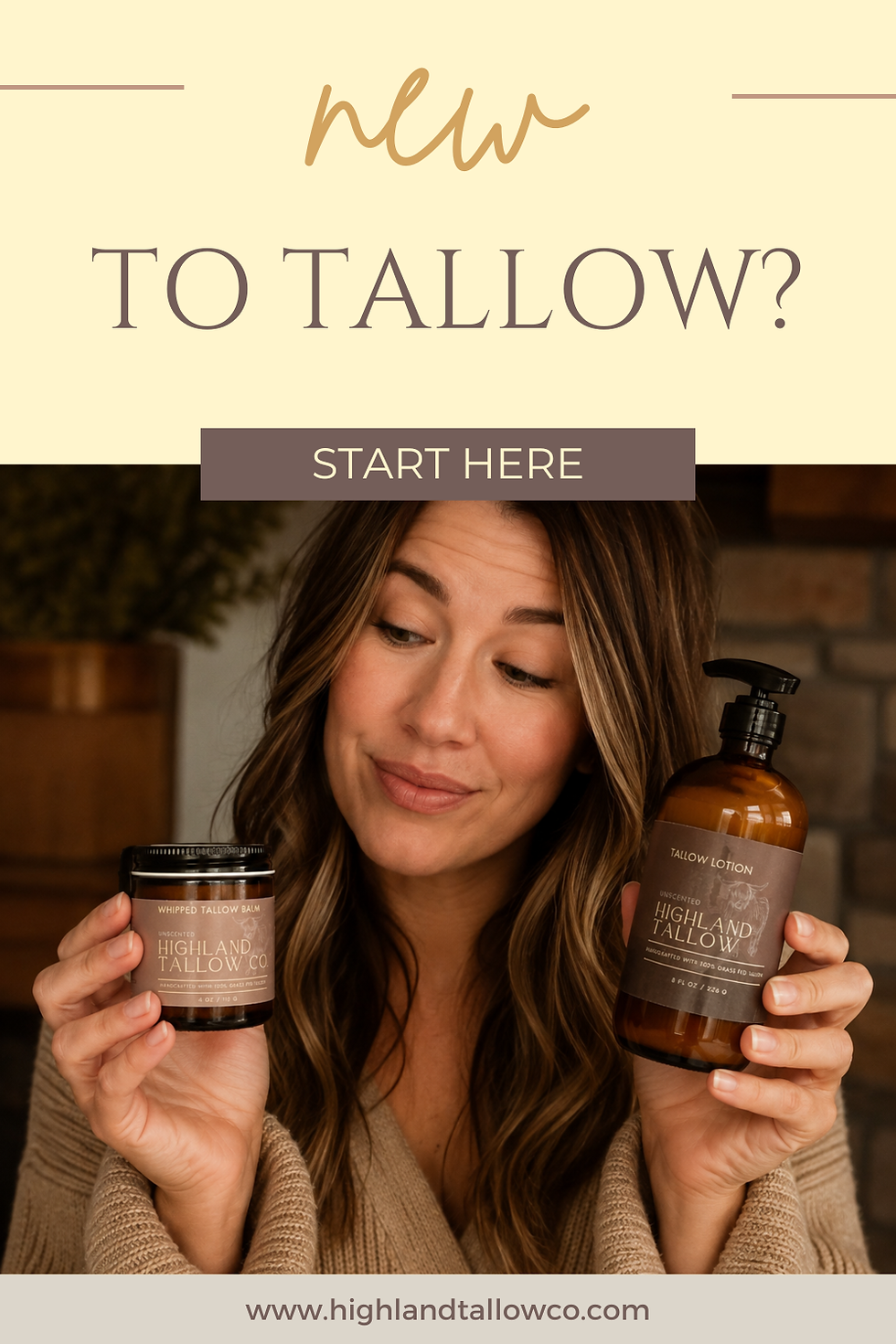
If you're curious about tallow but aren't sure which product to choose, start simple.
Choose an unscented option if you're sensitive to scents or want the simplest introduction to tallow. Choose a Tallow Lotion if you prefer the familiar feel and spreadability of lotion. Or try a Whipped Tallow Balm if you're looking for something richer and more concentrated.
You don't have to become a skincare expert to take better care of your skin.
Sometimes simpler really is enough.


Comments